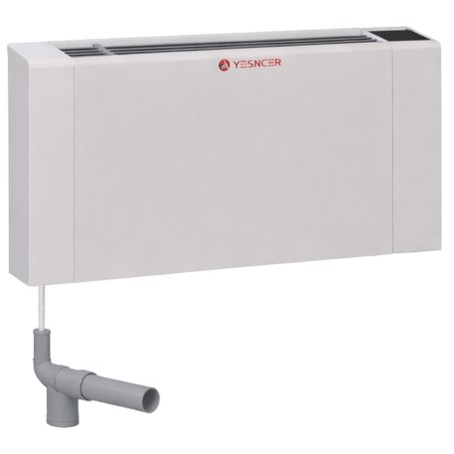
Connection to the sewer system (preferred)
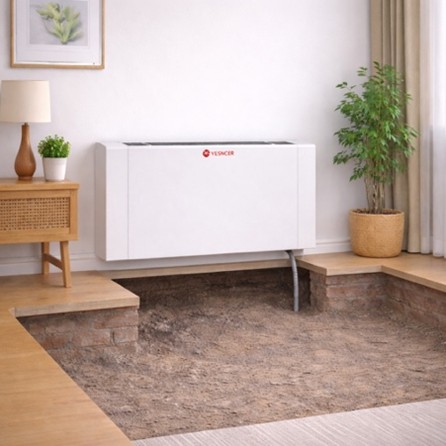
Crawl space drainage
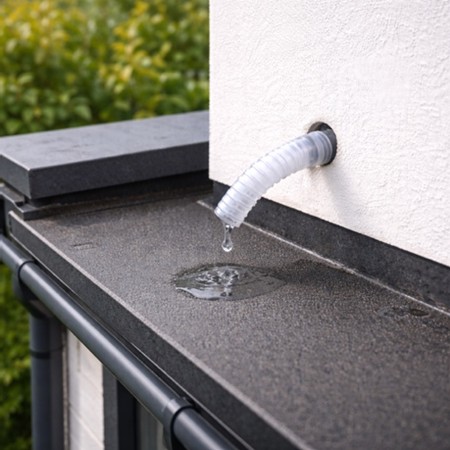
Balcony drainage
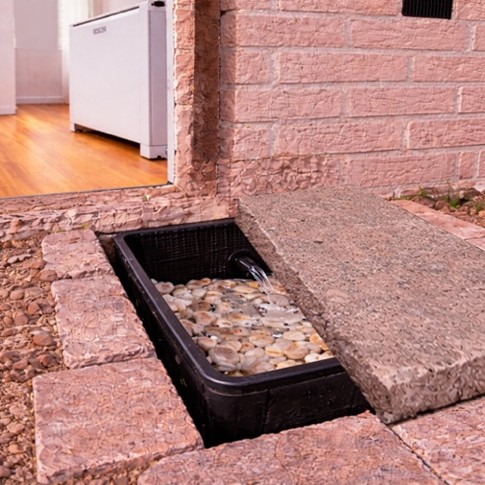
Garden gravel bed drainage

Installing All-Season radiators involves a major renovation of the home.
For this reason, it is best done during a renovation or in a new construction project.
What does it take to have a complete and fully functional system?
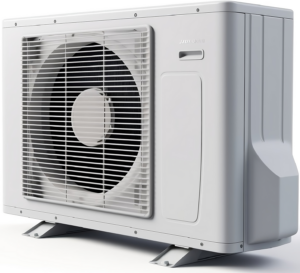
The system requires an air-to-water heat pump that supplies hot and cold water.
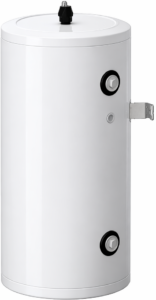
In addition, a buffer tank with a capacity of approximately 100 to 200 liters is often used in practice, installed indoors or in a well-insulated room.
A buffer tank is not mandatory in all situations, but it is strongly recommended for the following reasons:
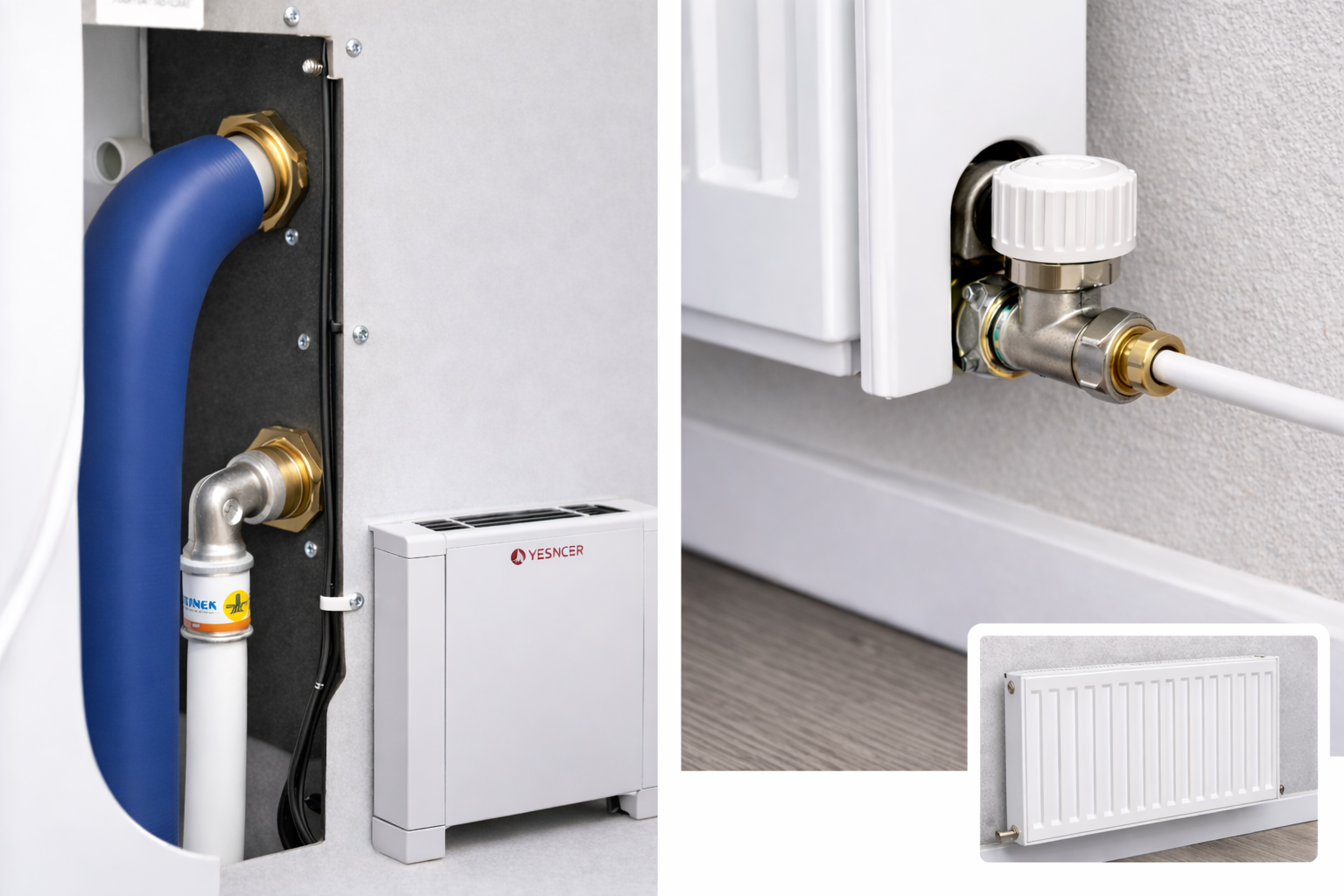
All-Season radiators require thicker pipes (approx. 20–25 mm) because the system operates with small temperature differences.
The existing radiator pipes are less suitable for this type of system.
In rooms where cooling is not needed (such as bathrooms or rarely used rooms), the existing pipes and radiators may be left in place.
Please note: At lower water temperatures and with older pipes, it will take longer for these areas to reach the desired temperature.
A 15 mm plastic pipe leading to a standard radiator and a 25 mm pipe leading to an All Season radiator. The 25 mm pipe is also insulated with blue insulation. Search for Upanor pipes
Possible solutions:
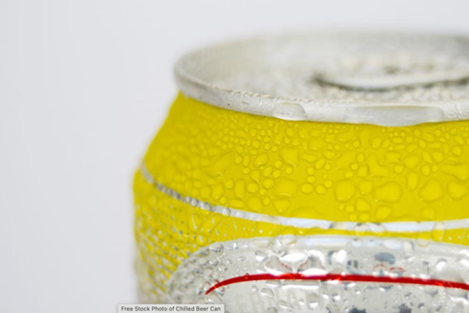
A cold surface in the summer (such as a can of soda) attracts moisture.
The same thing happens when cooling with All-Season radiators.
That is why every radiator needs a condensate drain.
Energy consumption is low.
Under normal use, a YC-20 radiator consumes approximately 160 kWh per year.
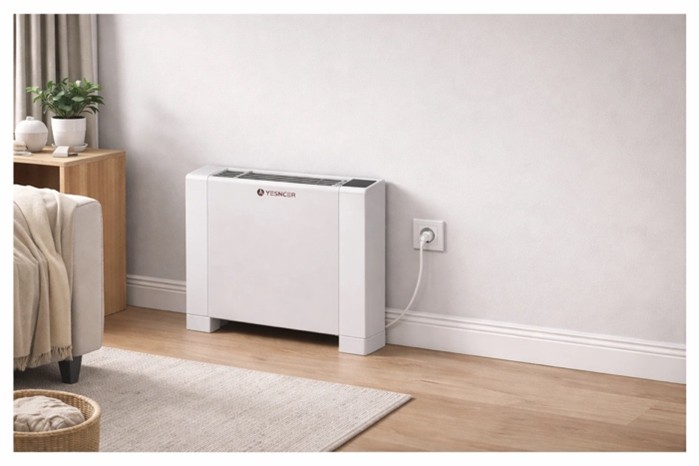
A power outlet can often be installed behind the radiator using a flat plug.
The radiator emits heat from the top, making it safe
Sometimes it’s possible to place the outlet behind the radiator, using a flat plug. Since the heat comes from the top of the All Season radiator, it’s fine temperature-wise to place the plug behind the radiator.
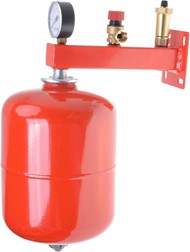
The expansion tank maintains a stable pressure (approx. 1.5–2.5 bar).
The circulation pump ensures water flow whenever a radiator requires heating or cooling.
When there is no demand, the pump shuts off automatically.
For the system to function properly, it is important to remove air from the pipes.
That is why venting points (manual or automatic) are included in the installation.
Every All Season radiator has a bleed valve.
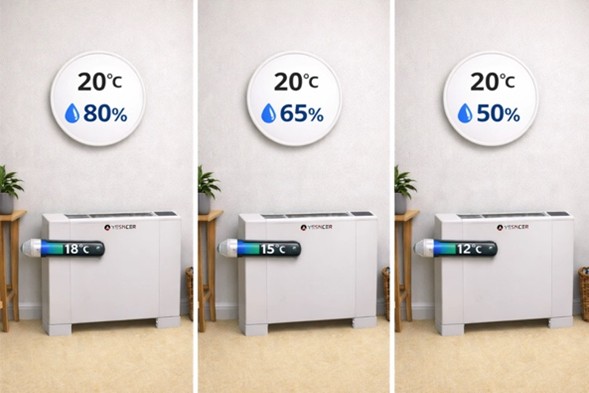
During cooling, the air in the room is automatically dehumidified.
The colder the water, the stronger the dehumidifying effect.
As a result, humidity levels can vary from day to day.
Have an expert determine in advance how much power is needed for each room.
If it turns out later that a radiator is too small, this can be partially compensated for by raising the water temperature. However, this comes at the expense of efficiency.
If it turns out later that your radiator is too small, this can be partially resolved by setting the heat pump’s water temperature higher.
Lorem ipsum dolor sit amet, consectetur adipiscing elit. Ut elit tellus, luctus nec ullamcorper mattis, pulvinar dapibus leo.
Lorem ipsum dolor sit amet, consectetur adipiscing elit. Ut elit tellus, luctus nec ullamcorper mattis, pulvinar dapibus leo.


